
Plywood vs. MDF for workshop cabinets.
Two sheet goods, one cabinet, and a decision that changes with the job. Here is the practical split — plus the qualifications that keep a simple rule from becoming bad advice.
The quick answer
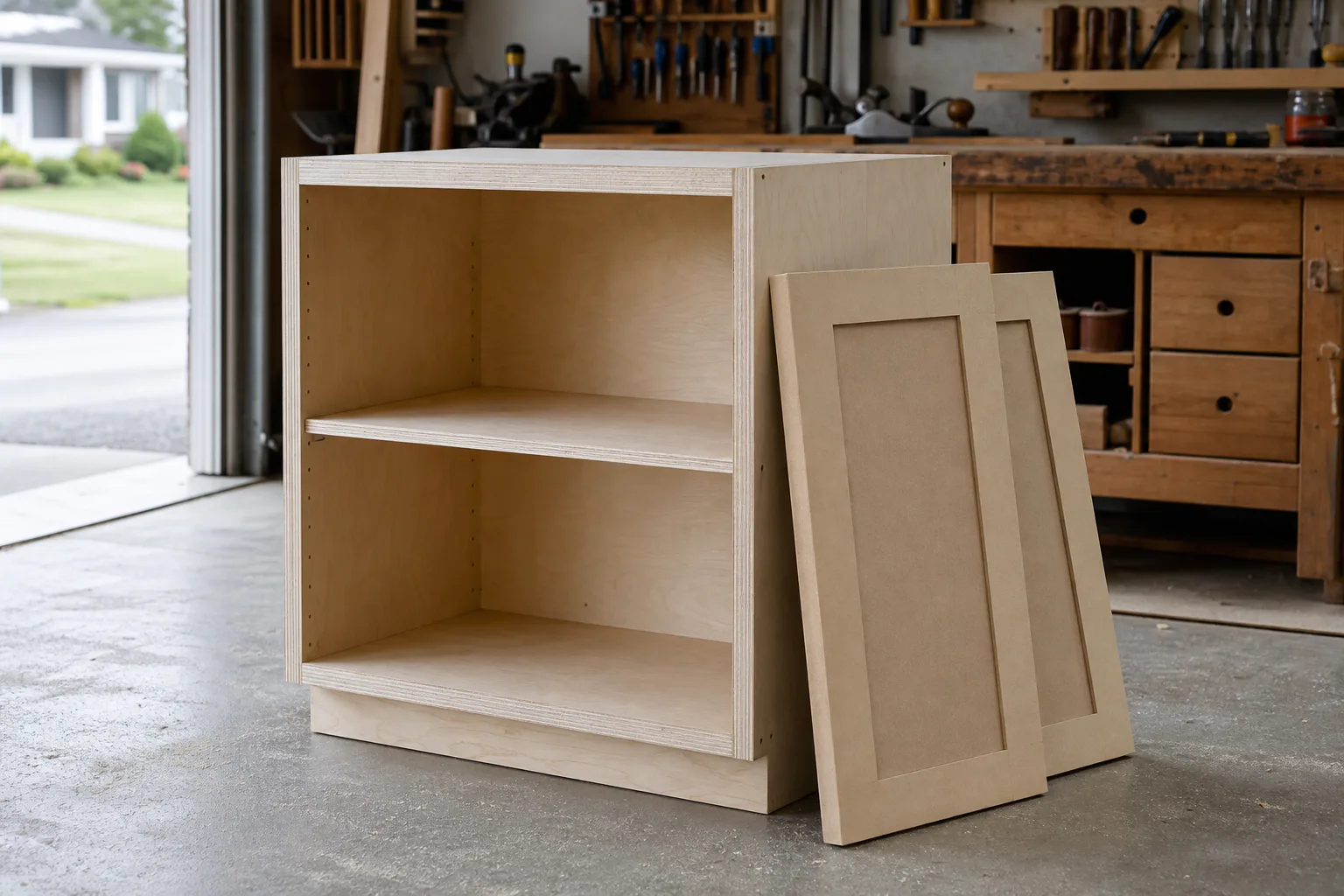
For a general-purpose workshop cabinet, start with cabinet-grade plywood for the boxes, shelves and plinth. Use MDF for painted doors, drawer fronts, jigs and templates, where its smooth, uniform surface is the advantage. If a part carries weight, takes repeated fasteners or may see moisture, plywood is usually the safer default. Neither unfinished material is waterproof.
DECISION FIRST · QUALIFICATIONS BELOWDECISION TABLE
At a glance.
| Consideration | Plywood | MDF |
|---|---|---|
| Best role | Cabinet boxes, shelves, cleats and plinths | Painted doors, drawer fronts, jigs and templates |
| Fasteners | Generally more forgiving and easier to rework | Predrill; keep fasteners away from edges; avoid repeated removal |
| Moisture | Better tolerance with the right grade and sealed edges — not waterproof | Standard MDF can swell after wetting; moisture-resistant MDF is still not waterproof |
| Paint finish | Veneer grain and edge plies need preparation | Very smooth faces; cut edges need sealing before paint |
| Handling | Often lighter at the same thickness; product-dependent | Typically heavier and awkward in full sheets |
| Long shelves | Usually the more efficient structural choice | More likely to need shorter spans, a stiffener or centre support |
| Cutting | Wood dust plus possible veneer splintering | A high volume of fine dust; capture it at the tool |
Panel grade, thickness, span, load, fastener type and edge distance can change the result. Check the manufacturer's data for the exact sheet you buy.
Where plywood wins.
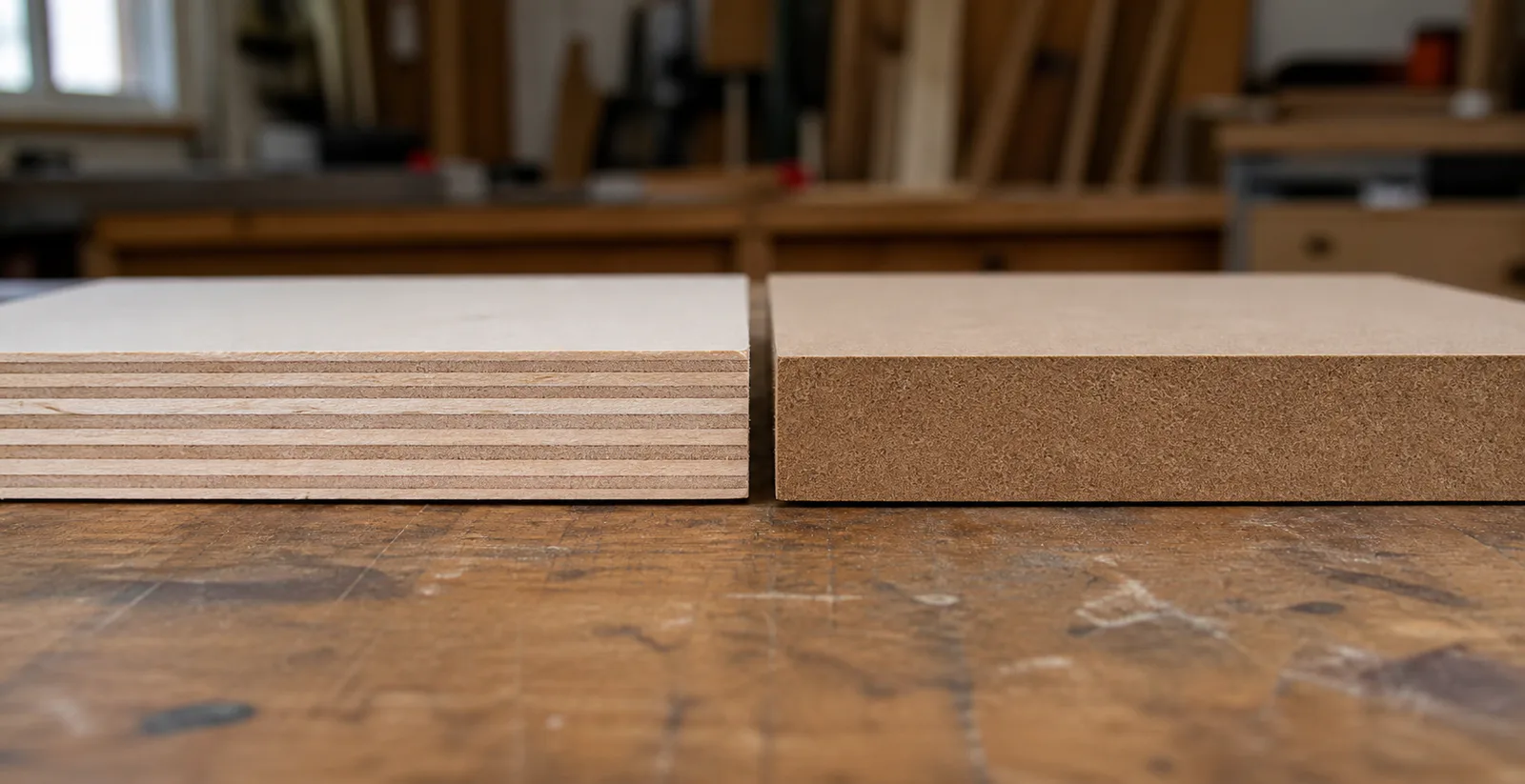
Cabinet boxes live a structural life. They carry tools, hang from cleats, accept drawer slides and get modified when the workshop changes. Plywood's cross-laminated veneers generally make it the more forgiving choice for those jobs, especially when a fastener may need to come out and go back in.
It is also often easier to handle than MDF at the same nominal thickness. That matters when you are lifting an upper cabinet alone or moving a full sheet through a small shop.
Where MDF earns its keep.
MDF is uniform and flat. Its faces paint smoothly, and routed profiles do not expose alternating veneer layers. That makes it a strong candidate for paint-grade slab or routed fronts, templates, jigs and fully supported surfaces.
The trade-offs are weight, sensitivity to wetting and less forgiving fastening — especially near edges. Predrill, use a suitable fastener, avoid overtightening and design joints so the screw is not doing all the work. Seal machined edges before painting because they absorb finish faster than the faces.
Do the real cost math.
A cheap sheet is not always a cheap cabinet. Compare products at the same thickness and intended grade, then price the full cut list — not a single sheet. Add waste, edge treatment, primer, supports, fasteners and the handling cost of a heavier panel.
Exact retail prices vary by region, grade and week — a published guide should pull current local prices with source links rather than present a temporary number as universal.
Control the dust — do not just wear it.
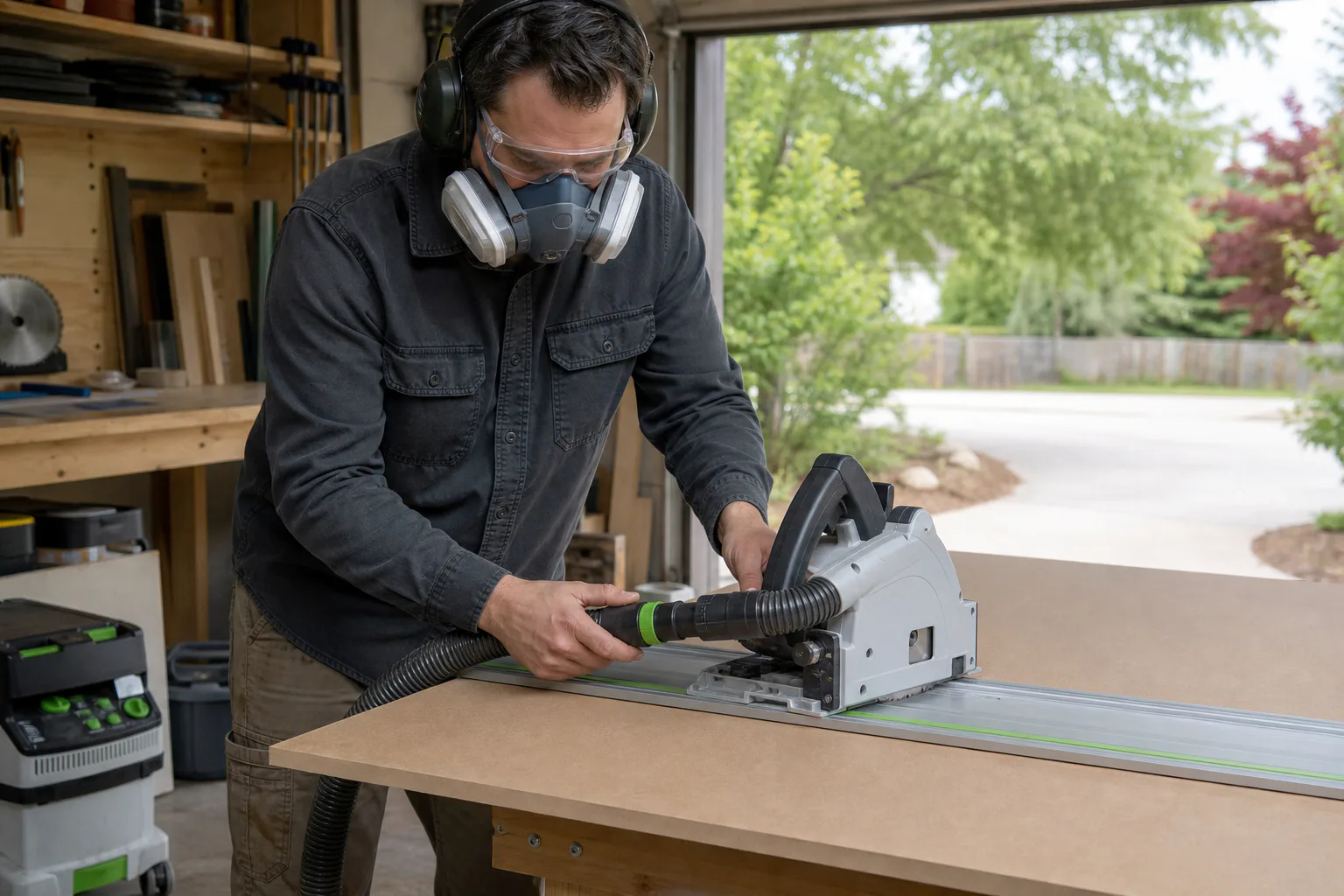
All wood dust deserves control. MDF commonly produces a large volume of fine dust, and composite wood products may contain formaldehyde-based binders. Personal protective equipment does not replace capture at the source.
- Buy traceable panels.In Canada, look for the required CANFER or recognized TSCA Title VI compliance information.
- Capture dust at the tool.Use a compatible extractor and filter, keep the hose close to the source, and provide fresh-air ventilation.
- Clean without launching dust.Vacuum with suitable filtration instead of dry sweeping or blowing settled dust back into the air.
- Select PPE — do not guess.Follow the panel safety data sheet and tool instructions. Tight-fitting respirators require the correct filter, a good seal and, in workplaces, a respiratory-protection program and fit testing.
Make the call by part.
Structure, fasteners and easier handling matter most.
Flat faces and crisp routed profiles earn their keep.
Use a suitable panel, raise it off the slab and seal exposed edges.
Uniform, stable and inexpensive enough to replace when worn.
Material alone is not the fix — add nosing, a rail or a centre support.
Before the first cut.
- Confirm the panel grade, actual thickness and compliance label.
- Lay out the complete cut list and grain direction before buying.
- Plan shelf spans, stiffeners and centre supports from the expected load.
- Choose joinery and fasteners for the panel — not from habit.
- Set up extraction, ventilation, eye and hearing protection before cutting.
- Test primer and paint on a face and a cut edge.
References.
Photography on this guide is AI-generated and disclosed in every caption. The guide was reviewed by the Make It Use It team before publishing; it does not claim that a named maker built, tested or endorsed these recommendations.